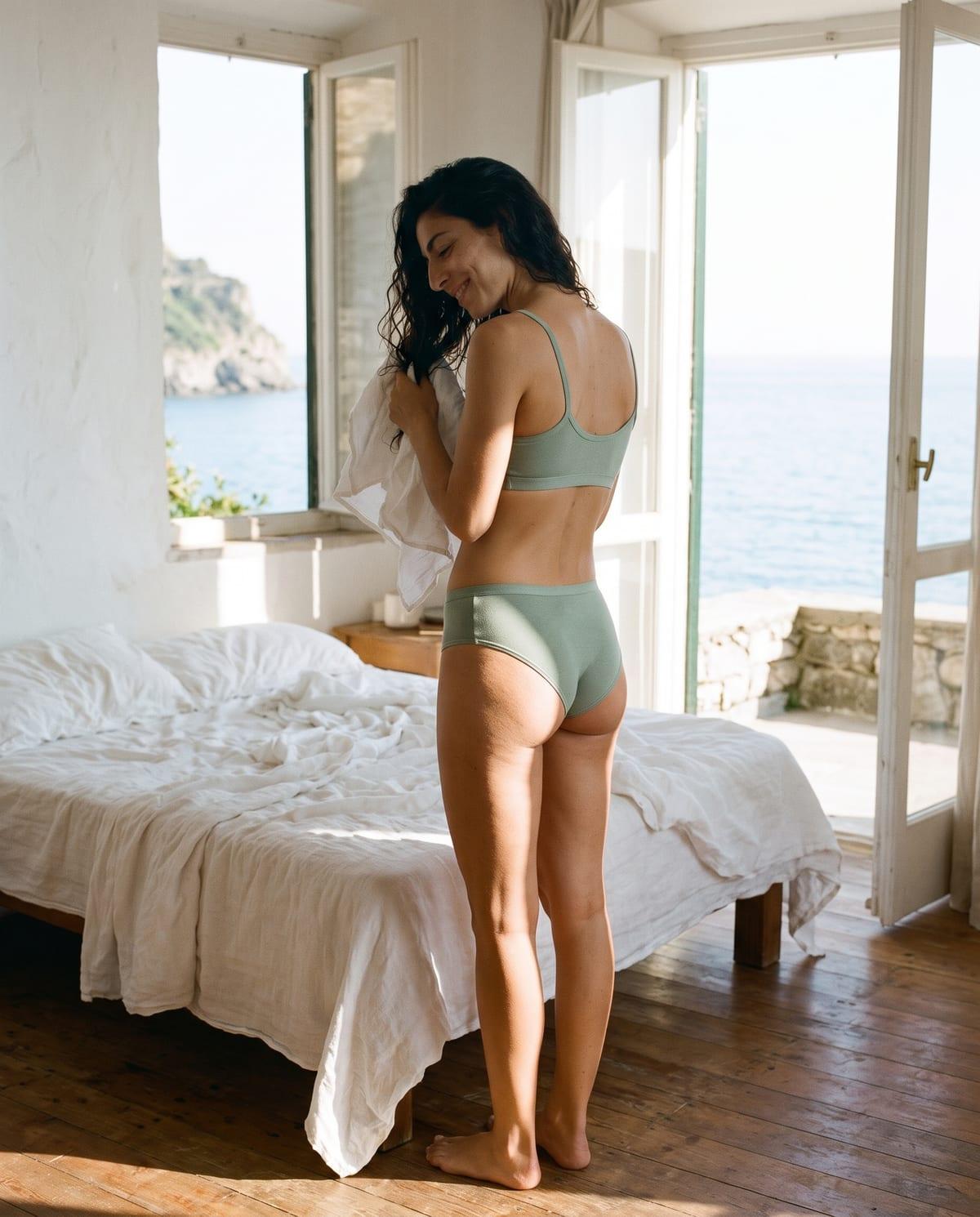
Cotton underwear for summer: what to look for
On a slow summer morning the first layer matters most. Why cotton, what the label tells you, which shapes to choose — and what to wear over them.
In this guide · 01 Why cotton when it's hot
01Why cotton when it's hot
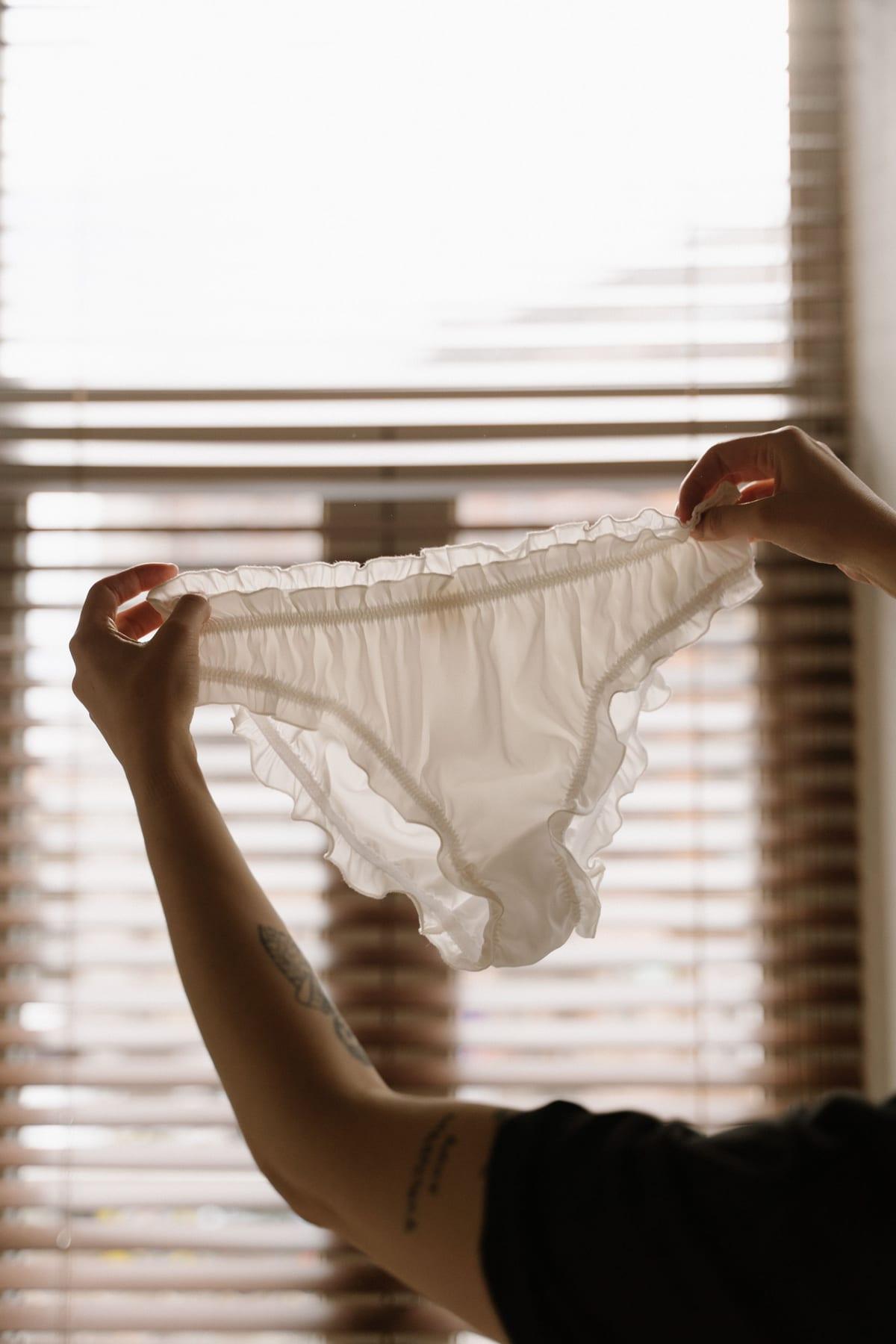
Cotton holds on to moisture far better than synthetics: in Cotton Incorporated's fibre tables its moisture regain is about 7%, against 4.5% for nylon and 0.4% for polyester. On a warm morning that's the difference you feel against the skin.
Doctors say the same in plainer words. The NHS lists cotton underwear among the simple ways to help prevent thrush, and a hospital health guide calls cotton the best material for underwear — less likely to irritate than synthetics. A cotton gusset sewn into synthetic briefs is not the same thing: the small panel won't breathe like 100% cotton.
02What to read on the label
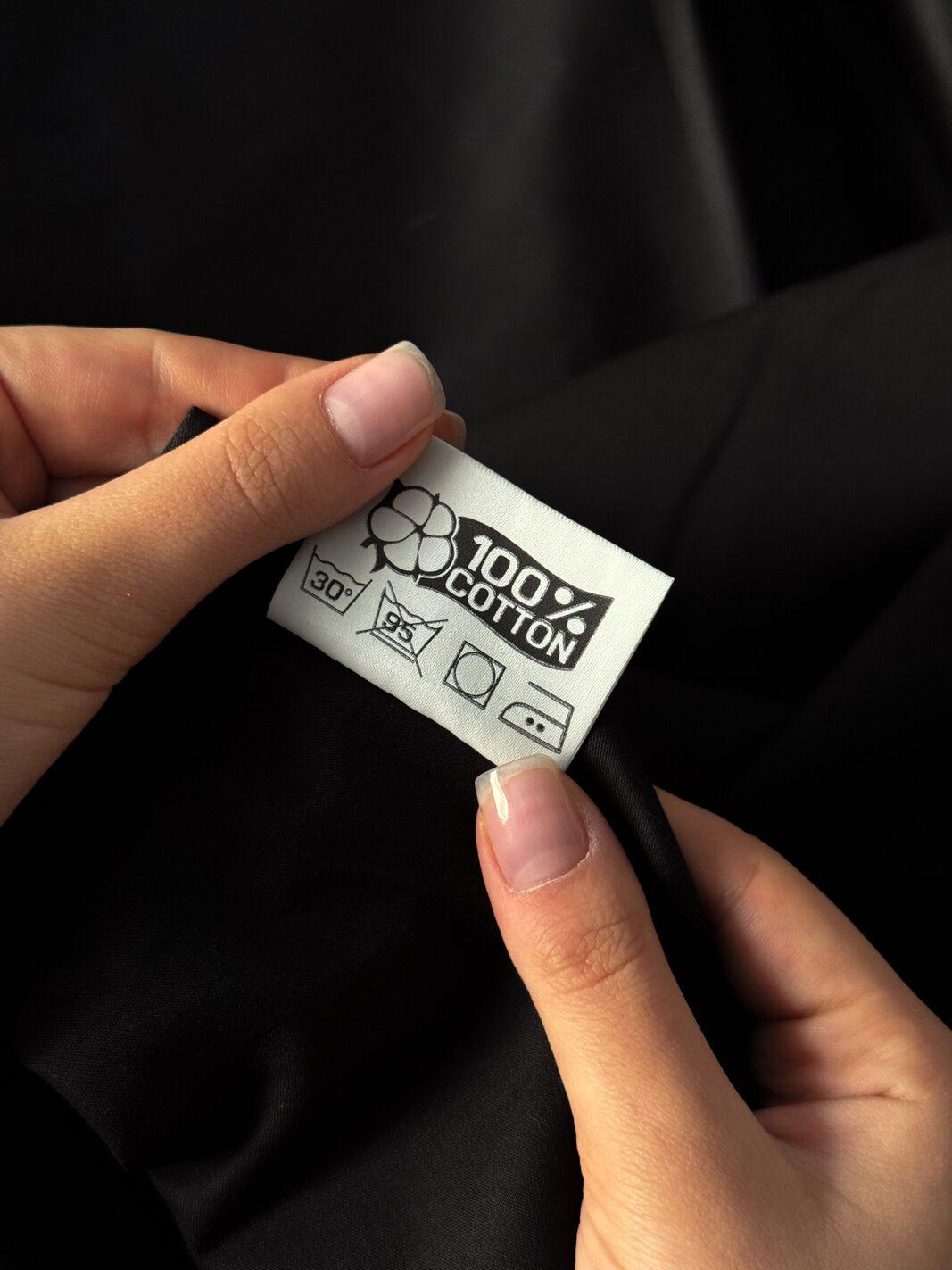
In the EU every fibre has to be named on the label with its percentage by weight, from the largest to the smallest. So the label tells you exactly how much cotton you're getting — read it before the price tag.
- Mostly cotton, a little elastane. Elastane is there for stretch and recovery; in clothes it's almost always used in small amounts, so the set keeps its shape without feeling synthetic.
- Modal or viscose in the mix. Softer and silkier, still a cellulose fibre — more in the questions below.
- Polyester or nylon first. Smooth and quick to dry, but they hold far less moisture than cotton.
- Jersey or rib. Jersey is the smooth, light knit of a T-shirt; rib has fine vertical ridges and more stretch, so it hugs the body more closely.
03The triangle
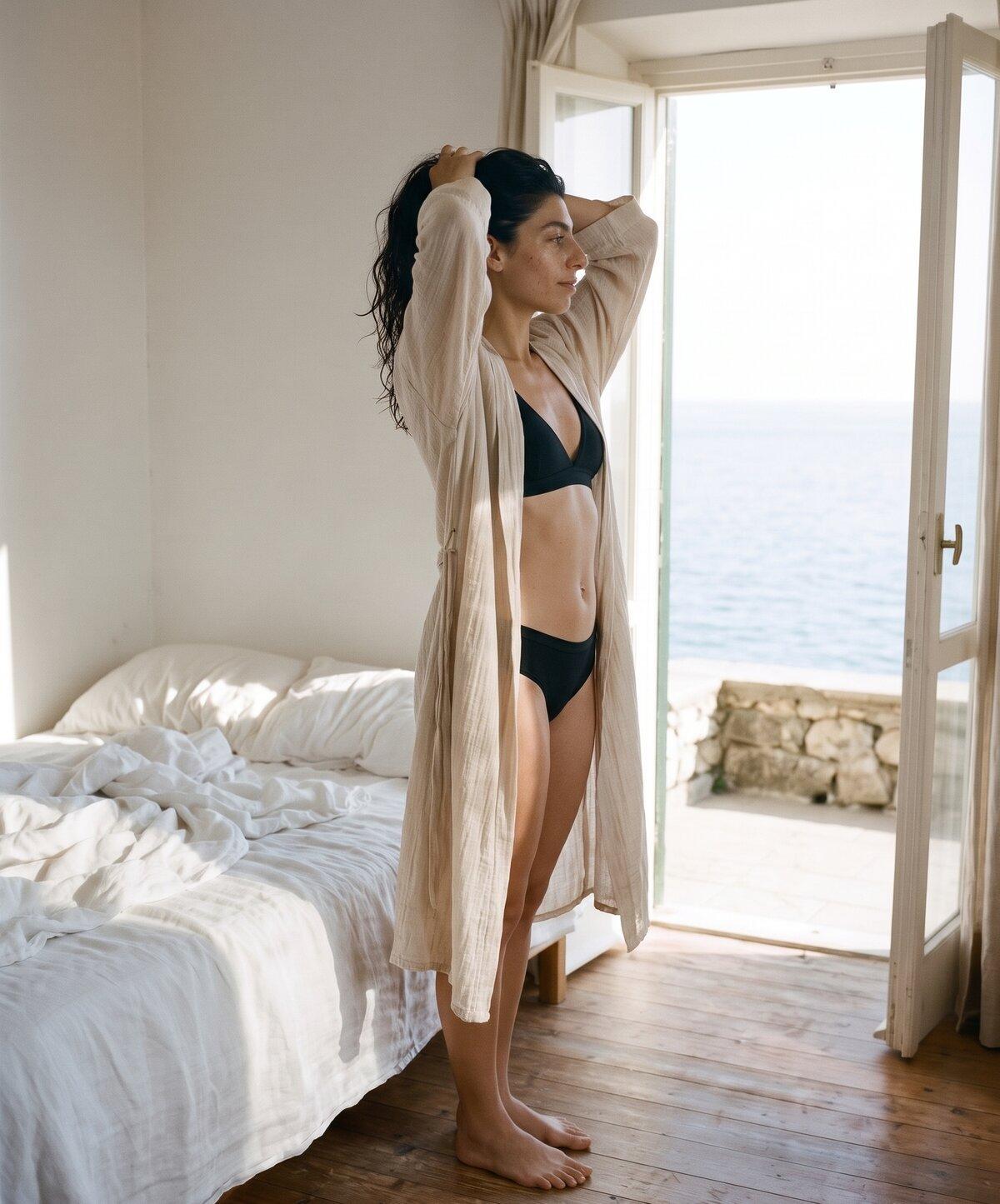
Two small cups on thin straps. It gives the least coverage of the three and the lightest feel — the one for the hottest mornings, under an open robe or a loose shirt. It doesn't lift; it follows.
04The longline
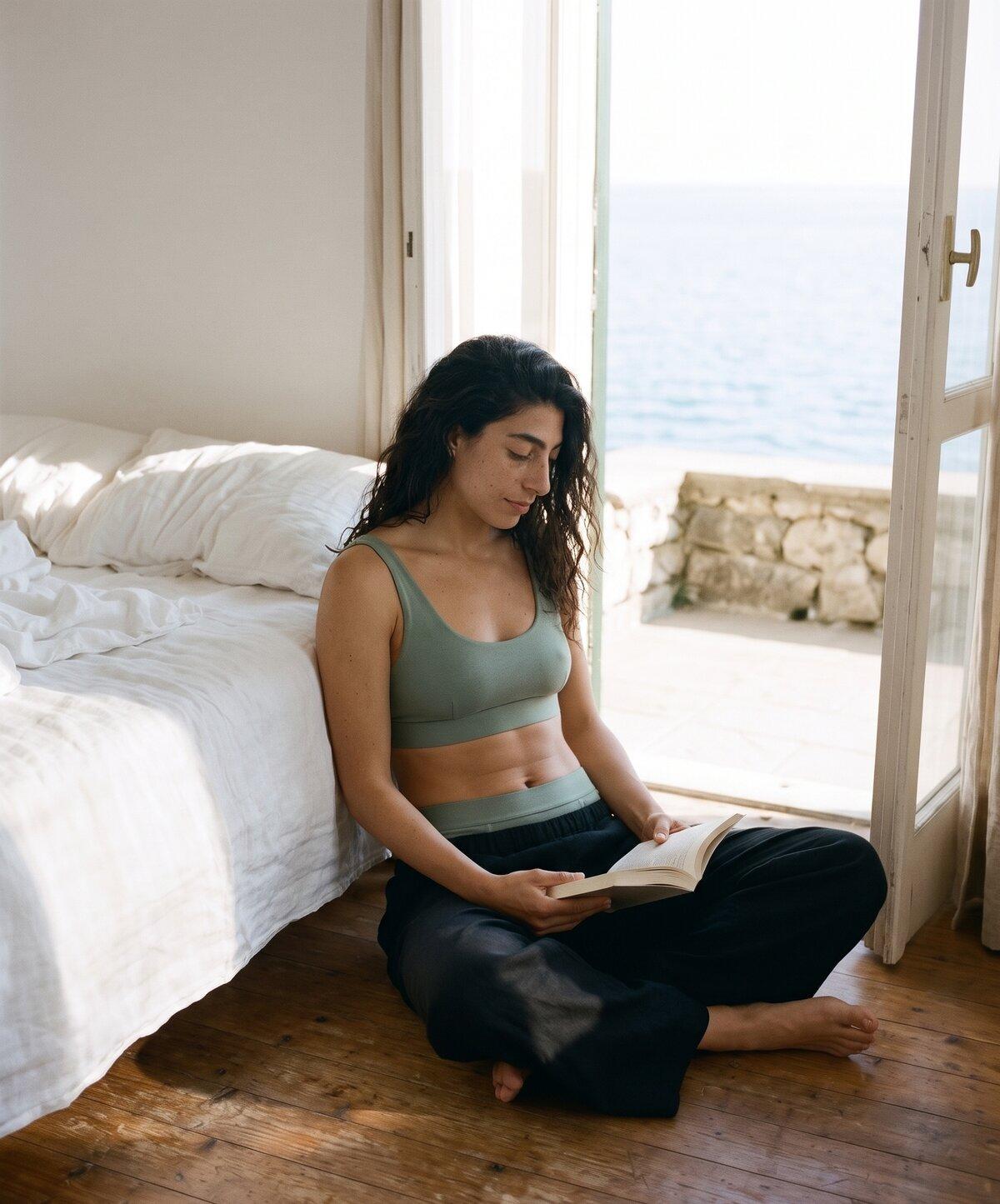
A deeper band under the cups, almost a crop top. It reads as a top with trousers or jeans, so it's the one to keep on when someone knocks at the door.
05The bandeau
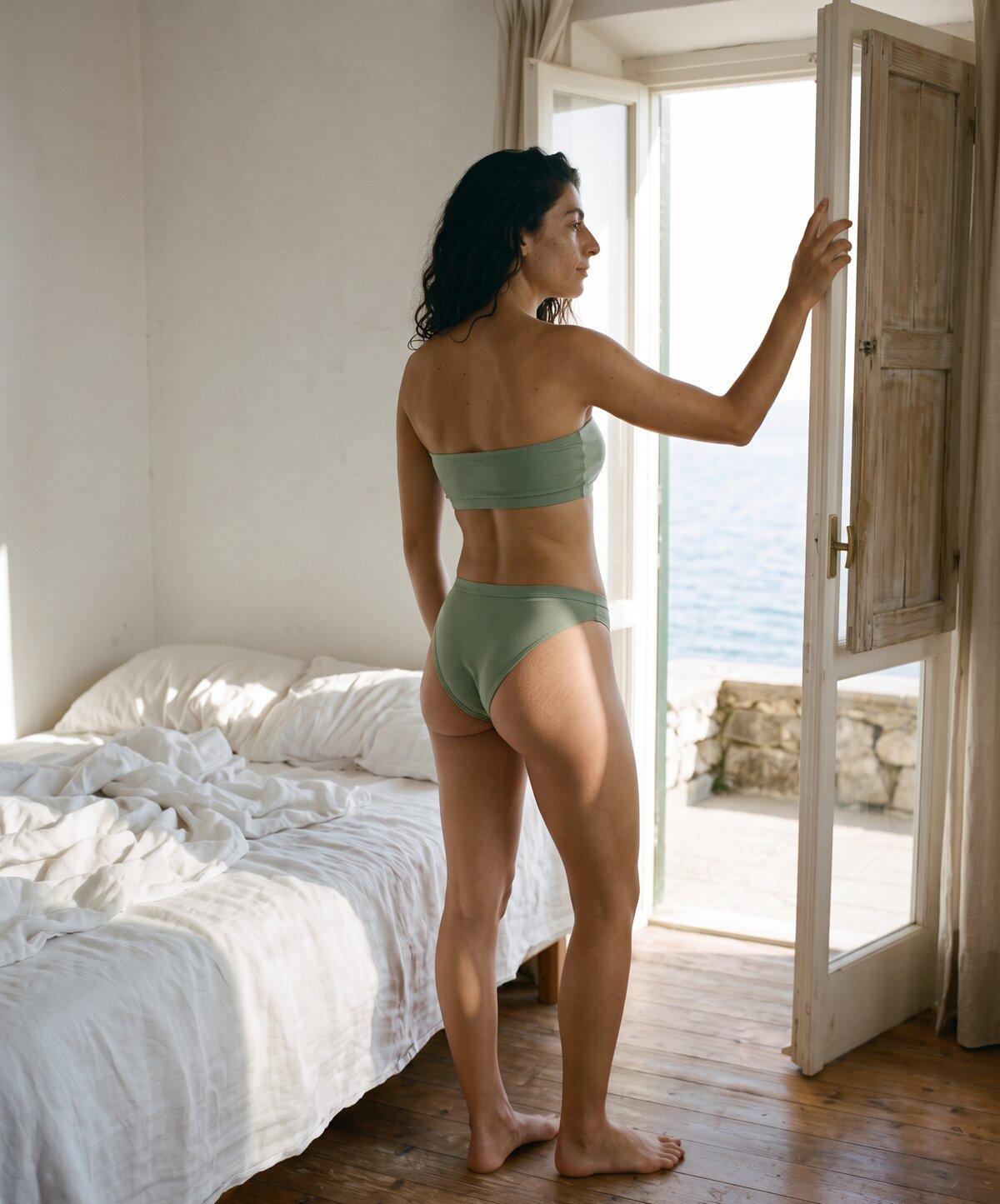
No straps at all — no lines on the shoulders after a morning in the sun. It works best for smaller busts or for days without much moving around.
06Cheeky: the everyday cut
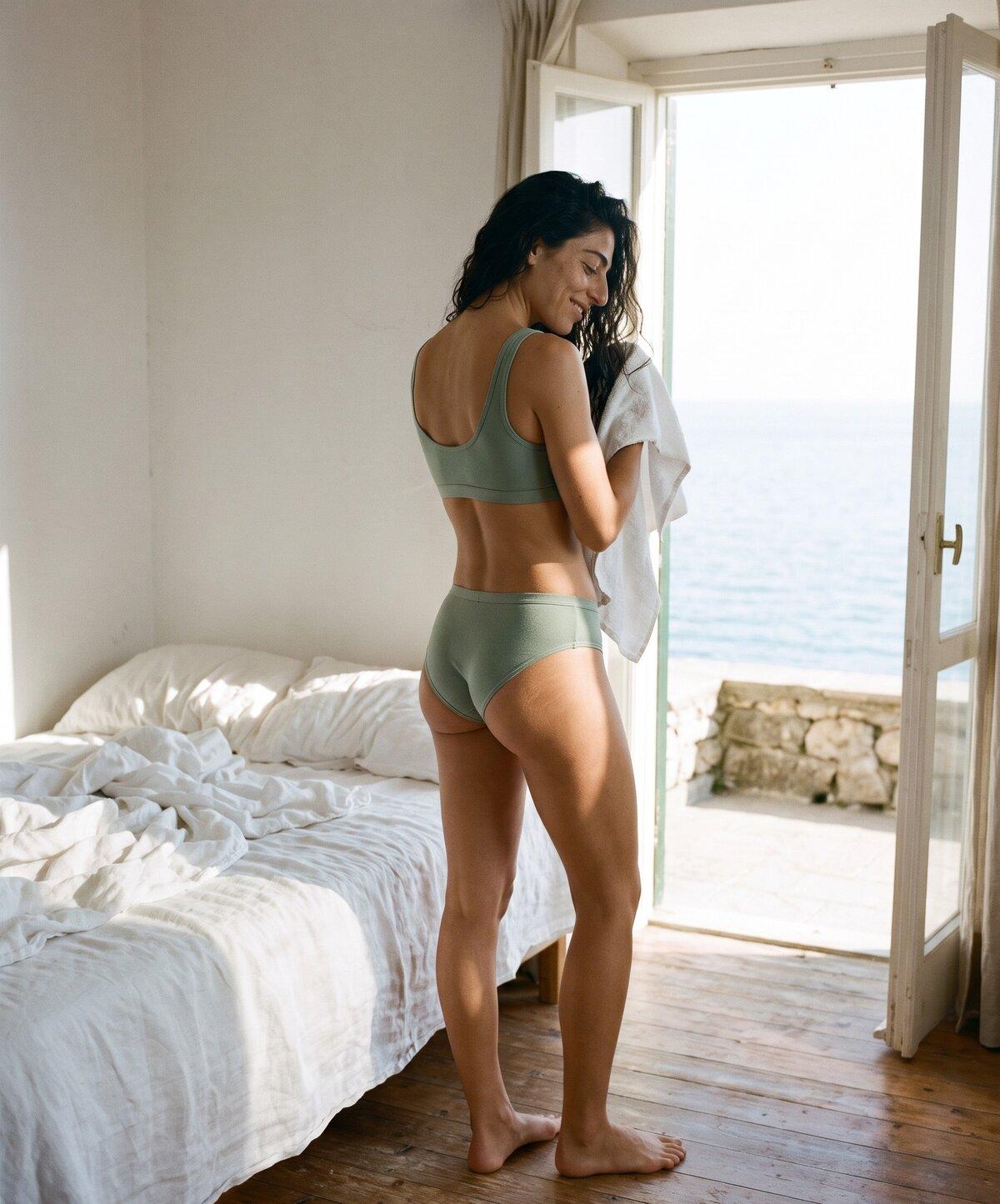
Wide sides, a back that covers most of the seat and lifts a little at the lower curve. In soft cotton it's the cut you forget you're wearing — which is the point on a slow day. How it compares with a Brazilian is in the four cuts.
07High-leg: longer legs under a shirt
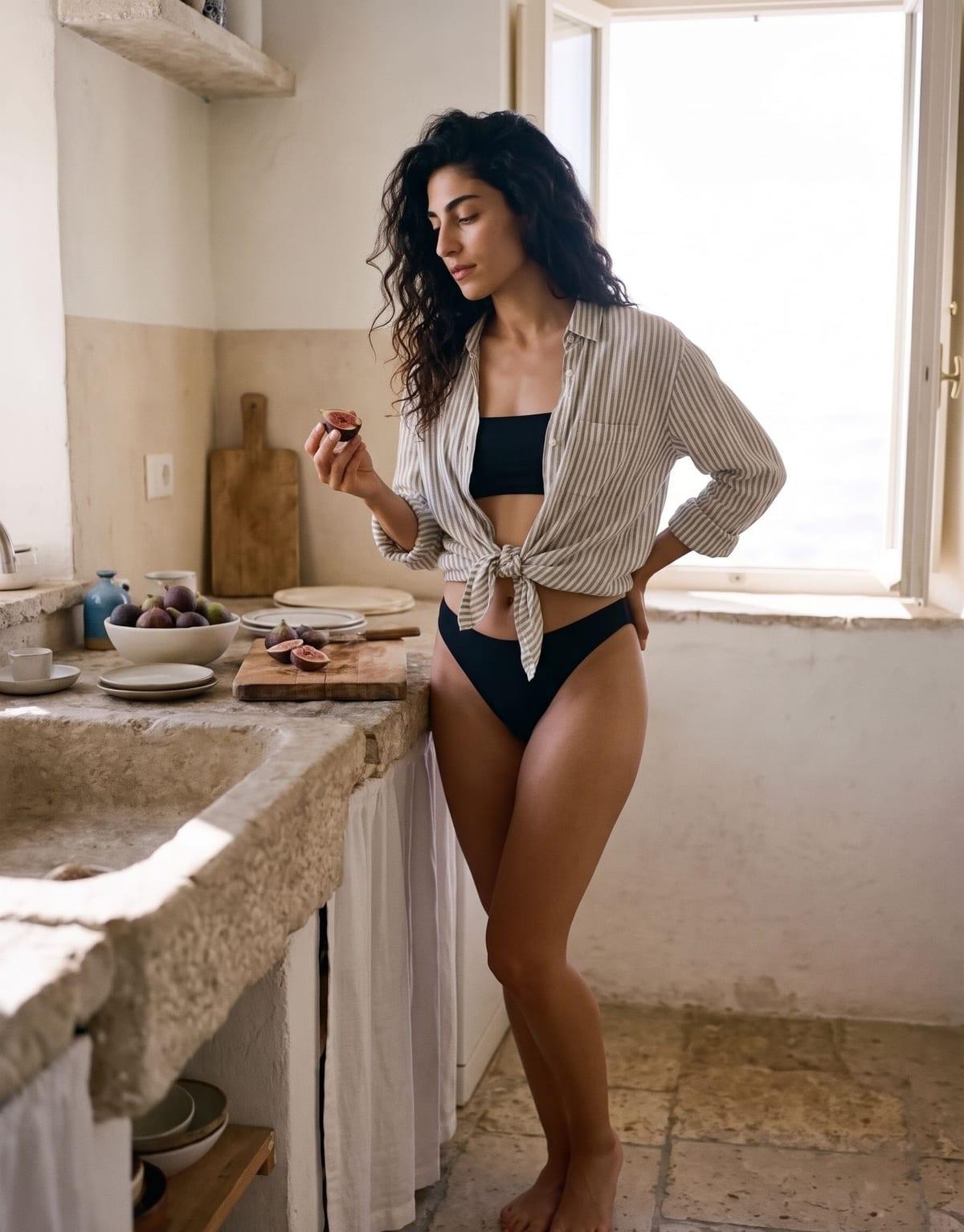
The leg opening rises above the hip bone and the band sits at the waist. Under a long open shirt it makes the legs look longer; with low trousers it isn't the one to choose — the band sits higher than the trousers.
Shops use the name loosely. Some mean this high-waisted cut; others a low bikini with the sides cut high and thin. What they share is the leg line — look at how high it climbs, not where the band sits.
08Wide soft trousers
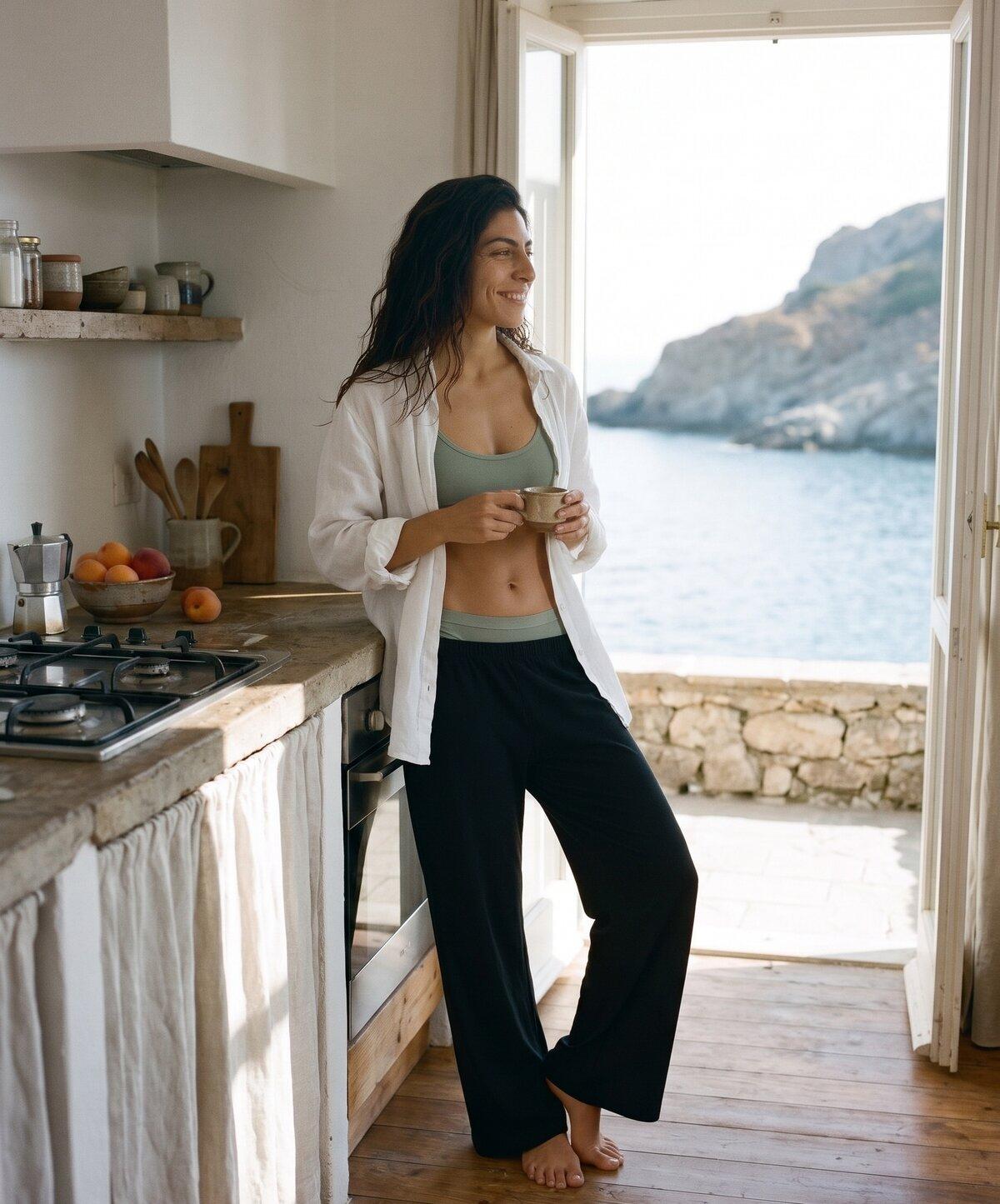
Wide black cotton-jersey trousers, worn low on the hips, a white linen shirt left open. A centimetre of the band above the trousers is part of the look — keep the band plain and the colours calm.
09Old jeans, unbuttoned

Light, loose, a little worn. With a longline top the jeans turn the base into an outfit you can walk out of the gate in. The high-leg band rising above the waistband is the summer version of the '90s look.
10A sarong, tied at the hip

One piece of cloth, tied at the side. From the terrace to the steps down to the sea without changing anything.
11Keeping it soft, keeping the colour
One woman we asked about home clothes named the two things that make her give up on them: colour that fades and cotton that stretches out after a few washes. Most of that comes down to heat.
The care label sets the limit — the number in the wash tub is the maximum temperature, and GINETEX, which runs those symbols, says to go by the label, not by the fibre. The elastane suffers first: its maker, The LYCRA Company, calls heat the enemy of spandex — too much and it loses its snap-back. So no hot tumble dryer.
- Wash inside out; dark colours keep longer that way.
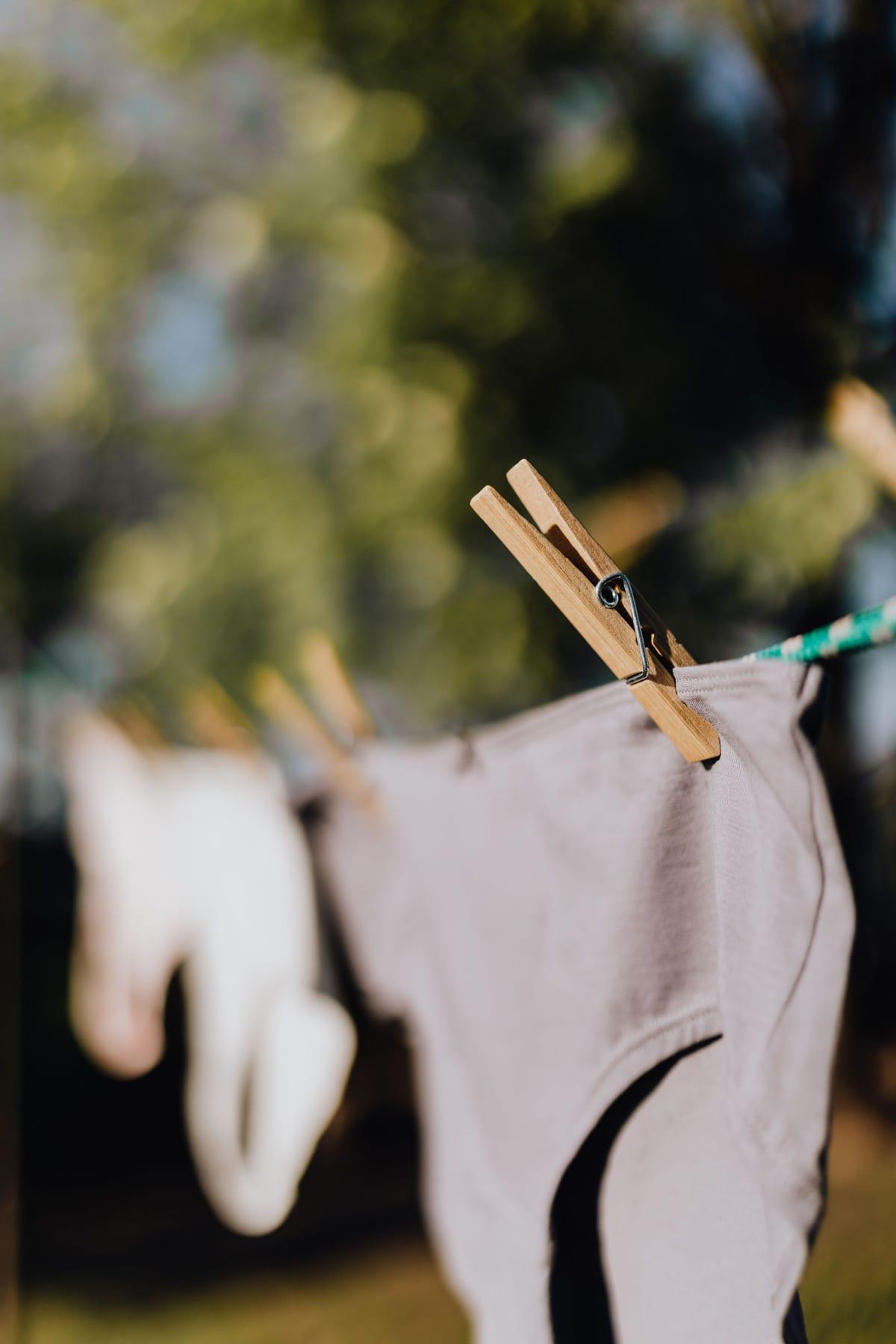
- Dry flat or on the line, out of direct sun, which fades colour.
- Wash new pieces once before wearing them, with a fragrance- and dye-free detergent.
12 Questions
Cotton or modal underwear?
Modal is a regenerated cellulose fibre — Lenzing has made it from beech wood since 1965 — and it feels softer and silkier than cotton. Cotton is the fibre health services recommend for underwear. Many soft sets mix the two; the label shows the split.
How should I wash cotton underwear?
By its care label: the number in the wash tub is the maximum temperature. Turn it inside out, use a fragrance-free detergent and skip the hot dryer — heat is what wears out the elastane.
Is cotton breathable?
It absorbs moisture and lets it evaporate — MedlinePlus says cotton allows normal evaporation of moisture. That's why health services recommend cotton underwear, or at least a cotton-lined crotch.
One guide like this, with every new issue.
- Cotton Incorporated — Textile Fibers (moisture regain table)
- NHS — Thrush in men and women
- Cleveland Clinic — The best material for underwear
- MedlinePlus — Vaginal yeast infection
- Your Europe — Textile labels
- Regulation (EU) No 1007/2011 on textile fibre names and labelling
- GINETEX — Care symbols
- The LYCRA Company — The secret to durable swimwear
- Consumer Reports — How to keep black clothes looking their best
- Lenzing — Product portfolio (modal)
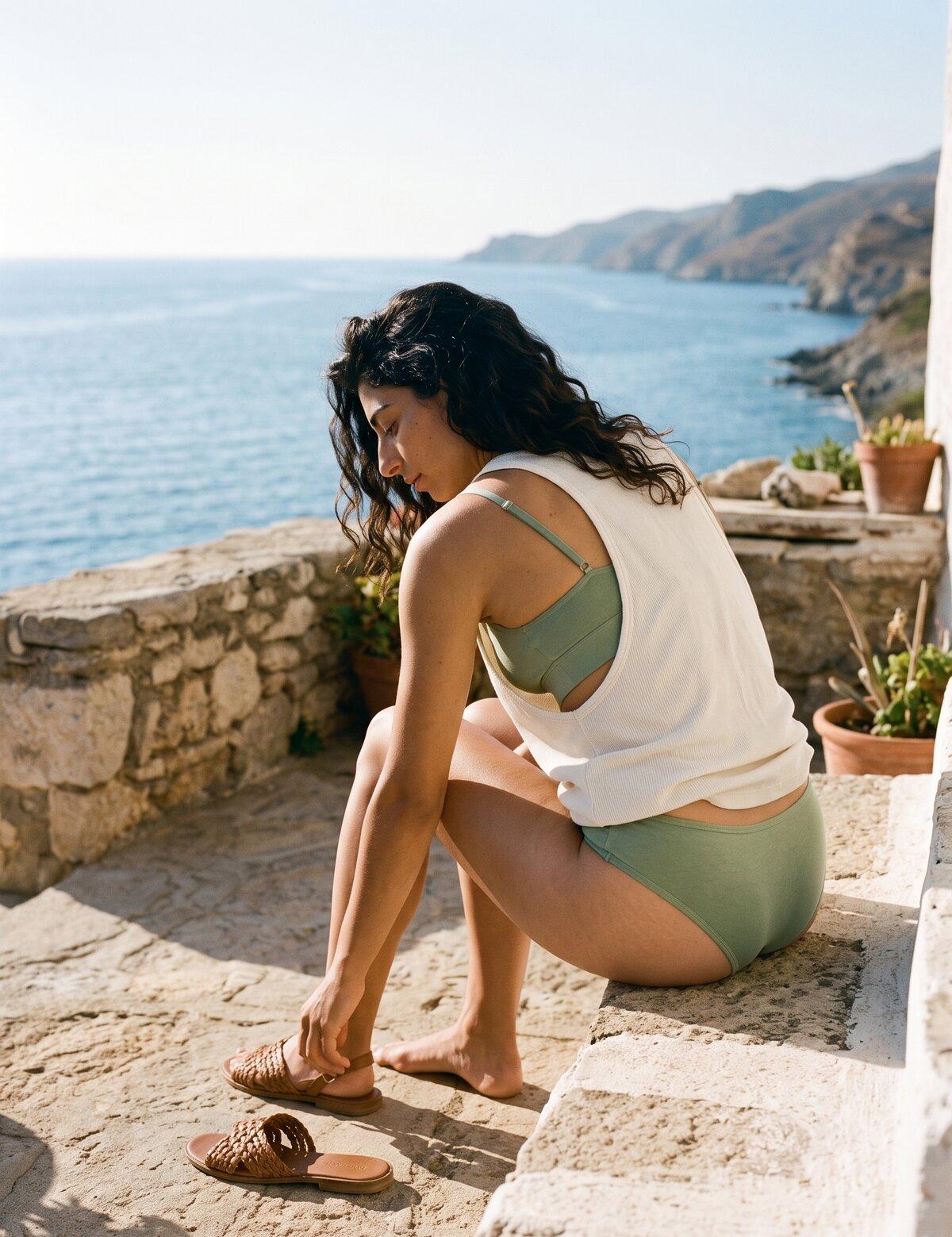
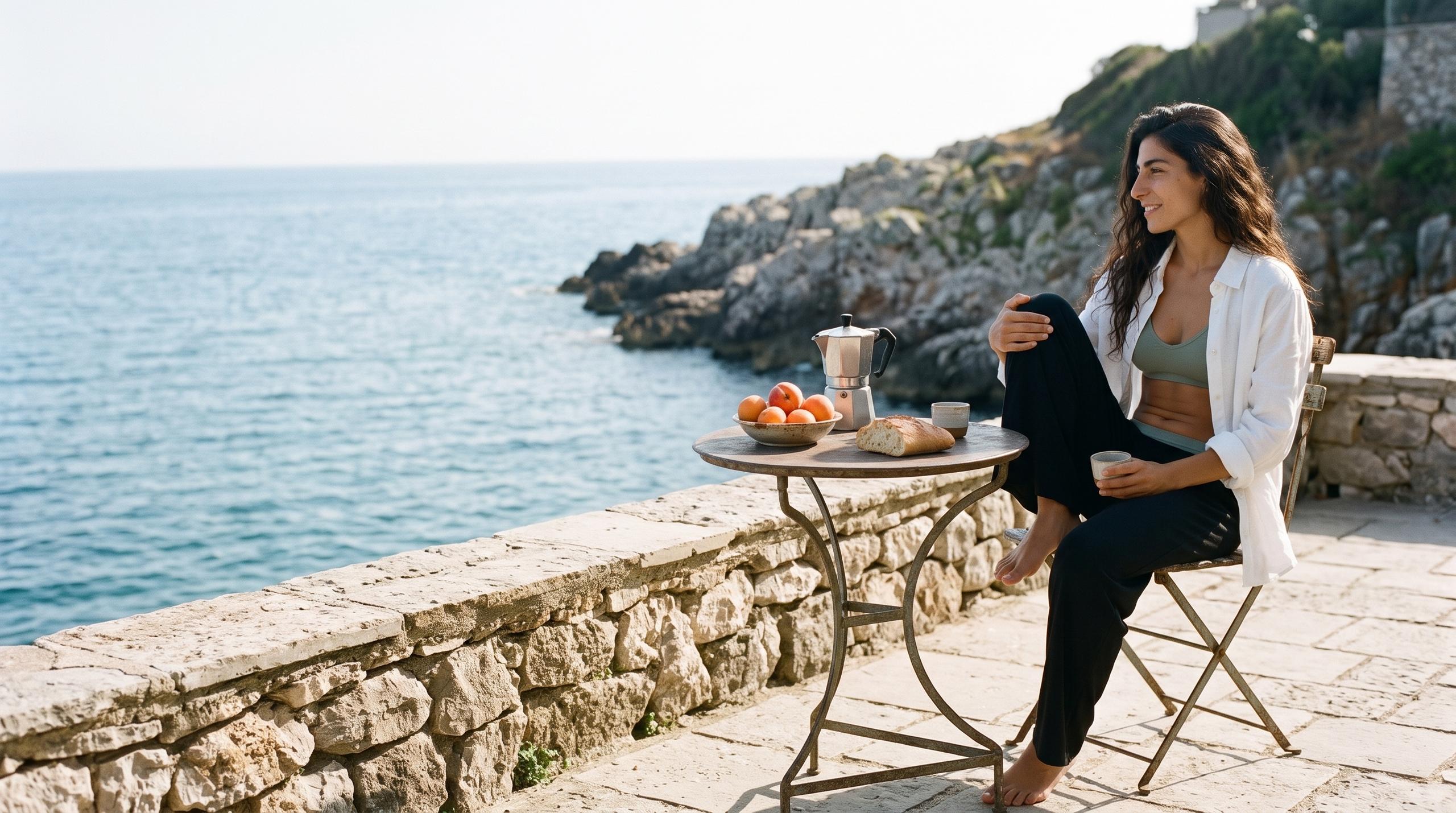 Meet LuceSunday Hours in southern Italy →Her slow morning in southern Italy begins in the same sage cotton set.